In commercial food processing, a high-quality breaded product depends on more than breadcrumbs alone. Instead, it requires a well-matched breadcrumb breading system that combines the right coating ingredients, application methods, and processing conditions.
For food manufacturers, an effective breading system can help improve coating uniformity, reduce coating loss, and achieve a more consistent appearance and texture. However, selecting the right breadcrumbs without considering the batter, substrate, and production process may lead to uneven coverage or weak adhesion.
So, how does a breadcrumb breading system work, and how can manufacturers choose the right coating solution for their products?
In this guide, we explain the key components, common applications, and practical considerations for building a reliable breading system for commercial food production.
1. What Is a Breadcrumb Breading System?
A breadcrumb breading system is a combination of coating ingredients and processing steps used to create a protective, crispy, and visually appealing outer layer on food products.
In many industrial applications, the system consists of three main stages: pre-dusting, batter application, and breadcrumb coating. Nevertheless, the exact process depends on the food product, desired texture, and production requirements.
The Three Main Components of a Breading System
1. Pre-Dust: Preparing the Product Surface
Pre-dust is a dry coating, commonly made from flour, starch, or a formulated breading mix. It helps condition the product surface and provides a foundation for the next coating layer.
When applied correctly, pre-dusting can support more uniform batter coverage and improve the overall coating process.
2. Batter Mix: Supporting Coating Adhesion
The batter layer acts as an adhesive interface between the food substrate and the outer breadcrumbs. Its formulation, viscosity, and application conditions influence how effectively the breadcrumbs attach.
Therefore, manufacturers should select a batter mix that matches the product surface, breadcrumb size, and intended processing conditions.
3. Breadcrumbs or Panko: Creating the Final Texture
Breadcrumbs form the outer coating and largely determine the finished product’s appearance, surface structure, and eating texture.
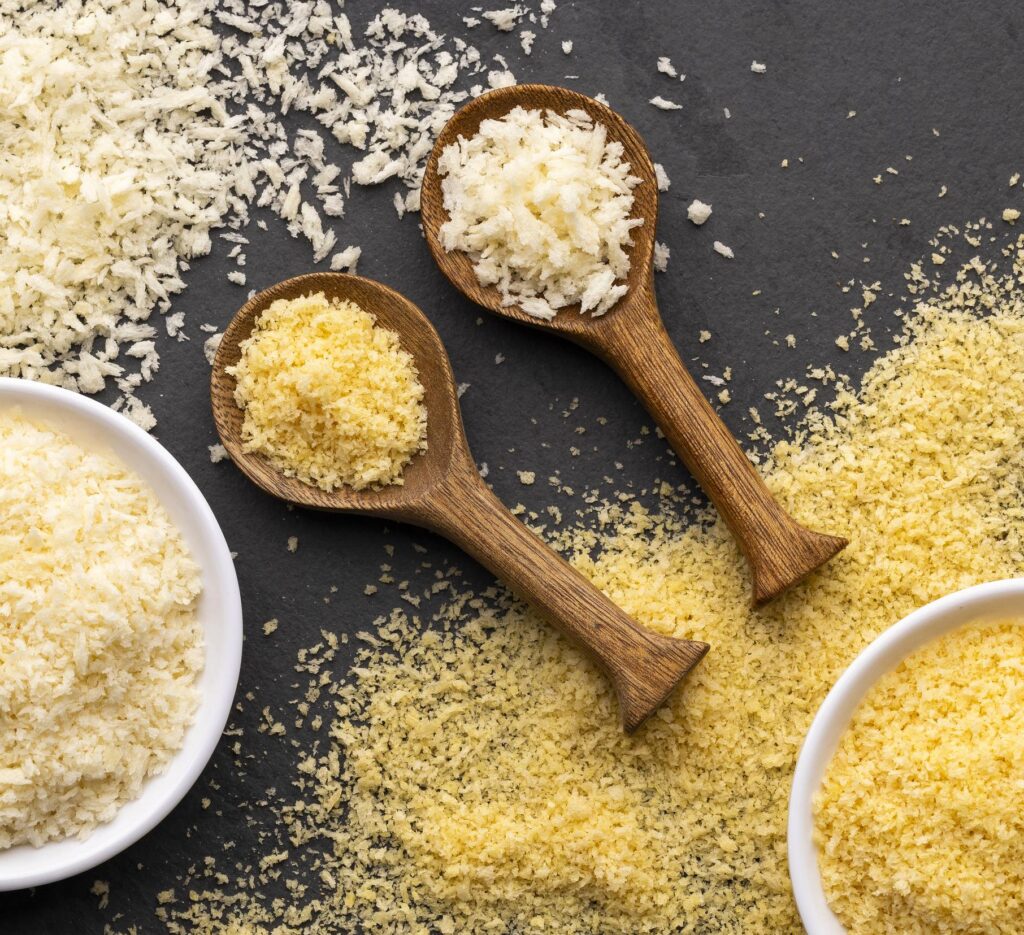
For example, fine breadcrumbs can provide a relatively smooth and uniform finish. In contrast, coarse breadcrumbs and Japanese-style panko can create a more textured surface with a pronounced crunch.
Ultimately, the best results come from coordinating all three components rather than evaluating each ingredient separately.
2. How Does an Industrial Breadcrumb Breading System Work?
A typical breading process follows a clear sequence. However, some products require additional coating stages or a different application method.
Step 1: Product Preparation
First, manufacturers prepare the food substrate, such as chicken breast, chicken strips, fish fillets, shrimp, or formed meat products.
Surface moisture, product shape, and temperature can affect coating pickup. Consequently, consistent product preparation is an important starting point.
Step 2: Pre-Dusting
Next, a thin layer of pre-dust is applied to the product surface.
The goal is to establish a suitable base without creating an excessively thick or powdery layer. Otherwise, the coating interface may become unstable during subsequent processing.
Step 3: Batter Application
The product then passes through a batter application stage, where the liquid coating mixture covers the surface.
At this stage, batter viscosity, solids content, drainage, and application uniformity can influence the final coating weight and adhesion.
For this reason, manufacturers should evaluate batter performance together with the selected breadcrumb type.
Step 4: Breadcrumb Application
After battering, the product receives its outer layer of breadcrumbs or panko.
During this stage, particle size, particle shape, and application conditions influence coverage and surface texture. In addition, the equipment should handle the selected crumb structure appropriately to avoid unnecessary breakage.
Step 5: Frying or Further Processing
Finally, the coated product moves to frying, baking, freezing, or another specified processing stage.
The actual result depends on the complete process, including coating formulation, product characteristics, time, temperature, and subsequent handling.
Therefore, manufacturers should validate the entire system under their actual production conditions rather than judging coating quality from an ingredient sample alone.
3. How to Choose the Right Breadcrumb Size for Different Applications
Choosing the correct breadcrumb size is one of the most important decisions when developing a breading system.
Different particle sizes create different visual effects and surface textures. However, larger crumbs are not automatically better, because adhesion, coverage, equipment compatibility, and finished-product requirements must also be considered.
| Breadcrumb Type | Typical Characteristics | Potential Applications |
|---|---|---|
| Fine breadcrumbs | Relatively smooth and uniform coverage | Nuggets, formed patties, and products requiring a finer crust |
| Medium breadcrumbs | Balanced coverage and visible texture | Chicken strips, cutlets, and breaded meat products |
| Coarse breadcrumbs | More pronounced surface texture | Crispy chicken, specialty cutlets, and textured coatings |
| Panko breadcrumbs | Light, irregular flakes and a distinctive crispy appearance | Japanese-style cutlets, chicken fillets, seafood, and premium breaded products |
| Specialty coating flakes | Distinctive shapes, colors, or textures | Customized chicken products, seafood, and innovative fried snacks |
These categories provide a starting point rather than fixed specifications. Actual particle-size ranges vary by supplier and product.
For example, a manufacturer producing chicken nuggets for a frozen-food brand may prioritize uniform coverage and a consistent finished appearance. By comparison, a producer of premium crispy chicken cutlets may prefer larger flakes that create a more distinctive surface.
The key is to match breadcrumb size and structure to the finished product, not simply choose the largest available particle.
4. Common Problems in Breadcrumb Coating and How to Improve Them
Even when manufacturers use high-quality ingredients, coating problems can still occur if the components and process are not properly matched.
Problem 1: Breadcrumbs Fall Off During Frying
Weak adhesion may result from inconsistent surface preparation, unsuitable batter properties, excessive surface moisture, or insufficient contact between the batter and breadcrumbs.
To address this issue, manufacturers should review the pre-dust application, batter formulation, crumb size, and product handling between coating stages.
In addition, production trials can help identify where coating loss occurs and which adjustments provide measurable improvements.
Problem 2: Uneven Coating Coverage
Uneven coverage may occur when product shapes vary, the batter does not spread consistently, or the breadcrumb application stage distributes particles unevenly.
Therefore, manufacturers should assess the entire coating sequence rather than focusing only on the final breadcrumb layer.
Consistent product preparation, controlled batter application, and suitable breadcrumb specifications can all contribute to a more uniform result.
Problem 3: The Finished Product Is Not Crispy Enough
A crispy coating depends on more than breadcrumb selection. Batter composition, coating thickness, frying conditions, moisture migration, and holding time can also affect the final texture.
For instance, a coarse panko may create a pronounced surface structure, but it cannot compensate for an unsuitable batter formulation or an incorrectly controlled frying process.
As a result, the coating ingredients and processing conditions should be evaluated together.
Problem 4: Excessive Coating Loss and Inconsistent Pickup
Excessive loose crumbs, unstable batter application, and unsuitable particle sizes may contribute to coating waste or variation in coating pickup.
To improve consistency, manufacturers can measure coating pickup, inspect the finished surface, and compare results across repeated production runs.
More importantly, they should evaluate usable finished-product yield alongside ingredient consumption. A coating that performs well in a small sample test may behave differently on a continuous production line.
5. Why Production Trials Matter for a Breading System
Sample testing is an important first step. However, laboratory or small-scale testing alone cannot fully predict performance in commercial production.
A production trial allows manufacturers to evaluate the coating system under realistic processing conditions.
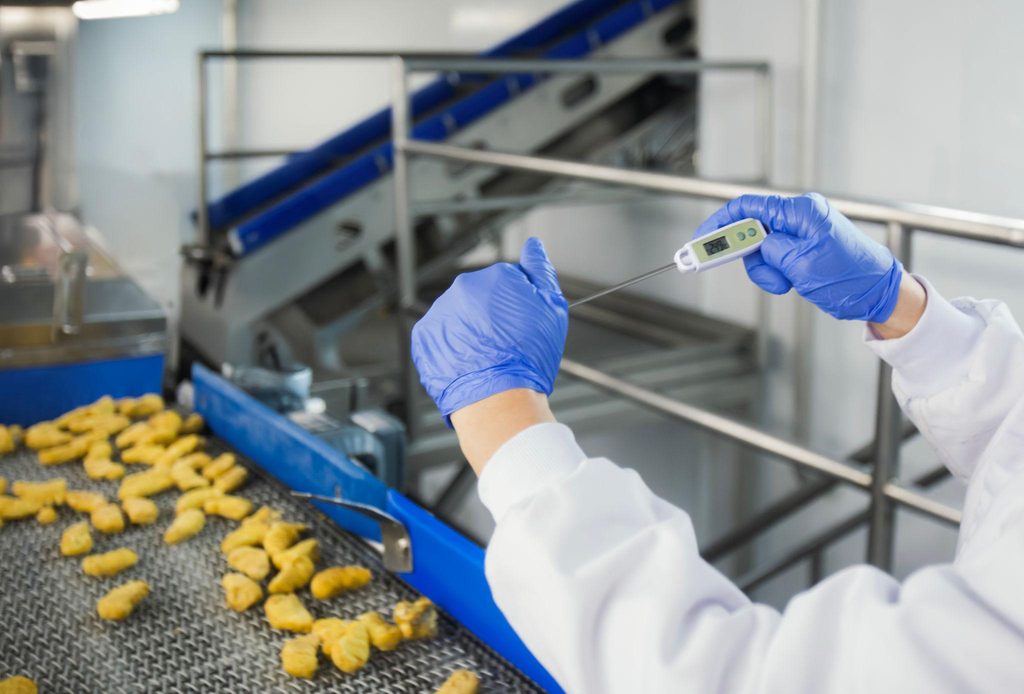
During the trial, consider the following factors:
- Coating pickup: How much coating remains on each product after excess material is removed?
- Adhesion: Does the coating remain attached during frying, freezing, packaging, and handling?
- Coverage: Is the surface coated consistently across different pieces and production batches?
- Texture: Does the finished product achieve the required crispness and bite?
- Appearance: Are the color, flake distribution, and surface structure suitable for the target market?
- Production efficiency: Does the coating perform consistently at the intended line speed?
- Finished-product yield: How much acceptable finished product is obtained from a given quantity of raw material?
Furthermore, manufacturers should evaluate the product at the point where consumers will actually eat it. For frozen products, for example, this may include testing after storage and reheating rather than immediately after frying.
By comparing these results, manufacturers can make more informed decisions about ingredient selection and process adjustments.
6. How to Build a More Consistent Breading Solution
A reliable breading system starts with a clear understanding of the finished product requirements.
Before selecting coating ingredients, manufacturers should define the product type, target appearance, desired texture, production method, and performance priorities.
Next, they should match the coating materials to these requirements.
For example, a system designed for chicken cutlets may require a different combination of pre-dust, batter mix, and panko than one developed for shrimp or fish fillets.
Likewise, a product intended for immediate foodservice use may have different texture-retention requirements from a frozen product that must withstand storage, transportation, and reheating.
Finally, manufacturers should validate the selected formulation through application testing and production trials. This approach helps identify practical adjustments before the coating solution is adopted for large-scale production.
In other words, consistent coating performance comes from a coordinated system, not from a single ingredient.
7. Guofen Mr. — Your Partner for Food Coating and Seasoning Solutions
At Guofen Mr. (Guofen Sir), we focus on food coating and seasoning solutions for commercial food manufacturers and food processing businesses.
Our product range covers several key components used in coated-food applications:
- Breadcrumbs and Panko: Different particle sizes, colors, and coating structures for a variety of fried-food applications.
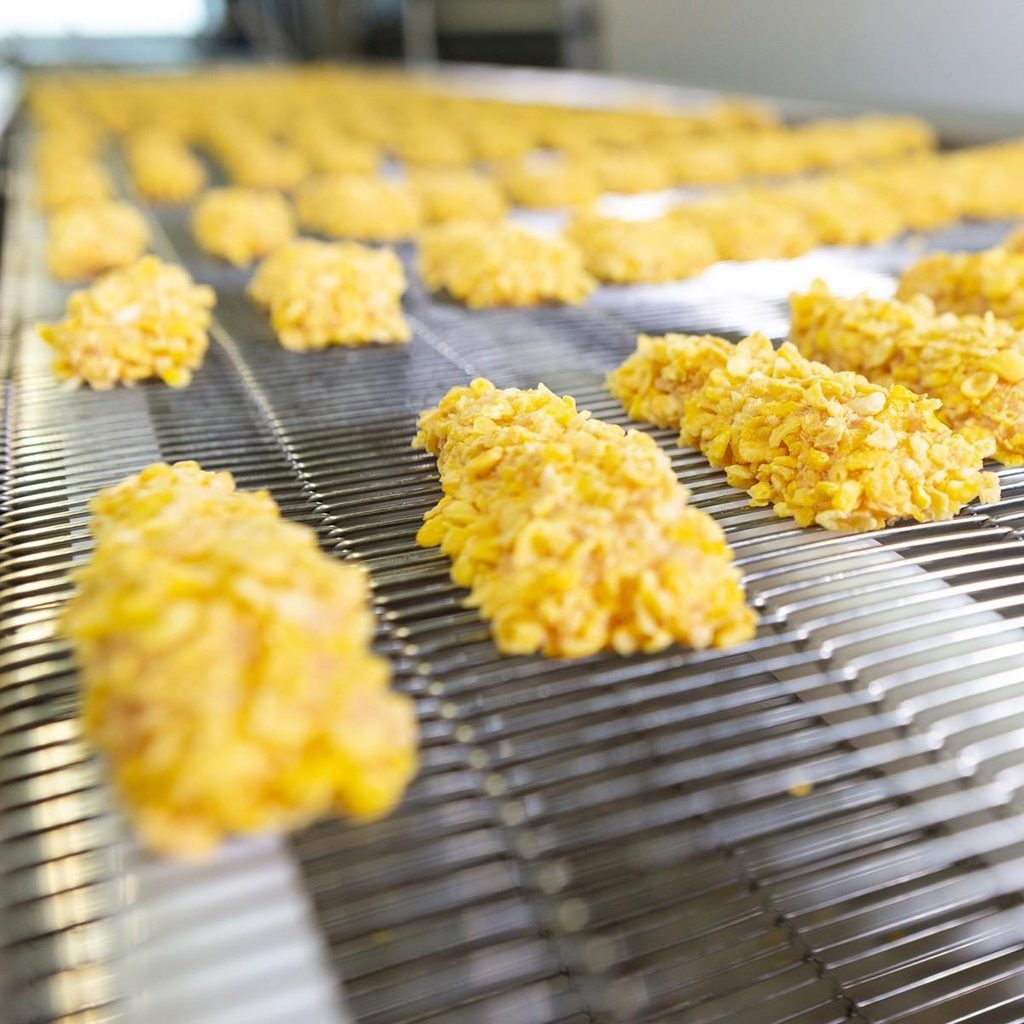
- Snowflake Coating Flakes: Specialty coating flakes for distinctive surface textures and customized product appearances.
- Breading and Batter Mixes: Dry coating formulations developed for different application requirements.
- Marinades and Seasonings: Flavor solutions for chicken, meat, seafood, and other food products.
Beyond supplying individual ingredients, we understand that different products require different coating combinations. Therefore, we work with customers to discuss application requirements, product specifications, and customization options for suitable coating solutions.
Our OEM and ODM capabilities also support customized product development, including selected particle sizes, colors, formulations, and packaging options, subject to technical feasibility.
Whether you manufacture crispy chicken, breaded fish fillets, shrimp products, chicken cutlets, or other coated foods, selecting the right coating ingredients is an important step toward achieving your product goals.
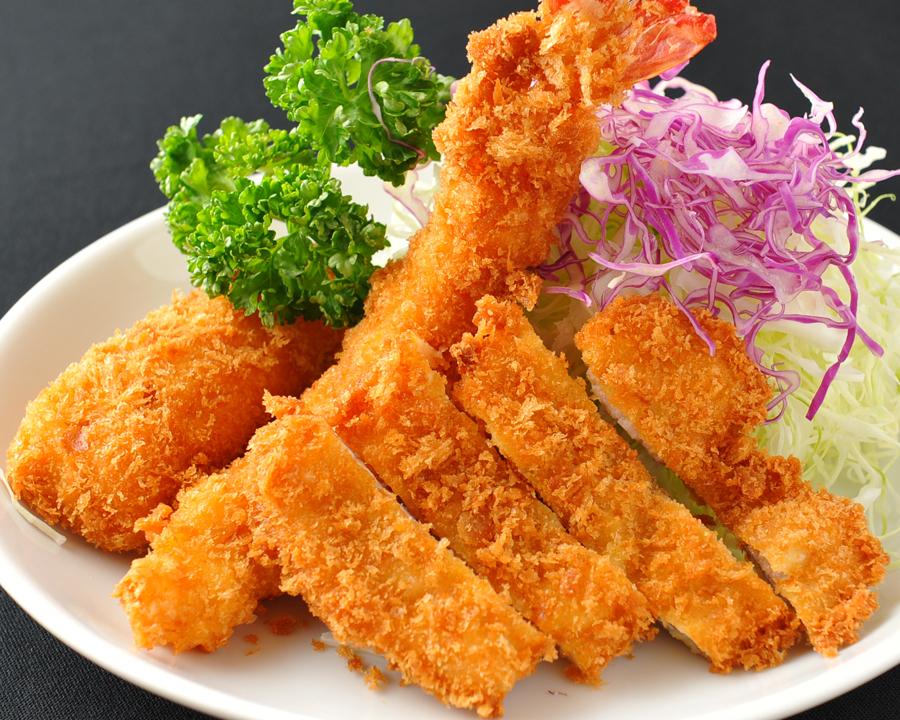
Looking for the Right Breadcrumb Breading System for Your Products?
Tell us what you manufacture and what you want to improve. Our team can discuss suitable breadcrumbs, panko, coating flakes, batter mixes, and seasoning options based on your application requirements.
Contact Guofen Mr. today to discuss your food coating project and explore a customized coating solution for your production needs.
Email:[email protected]