Industry Expert Conducts In-depth Research at Jinlejia Factory
To boost upgrading of medicinal food industry, we aim to combine traditional healthy diet culture with modern food manufacturing.
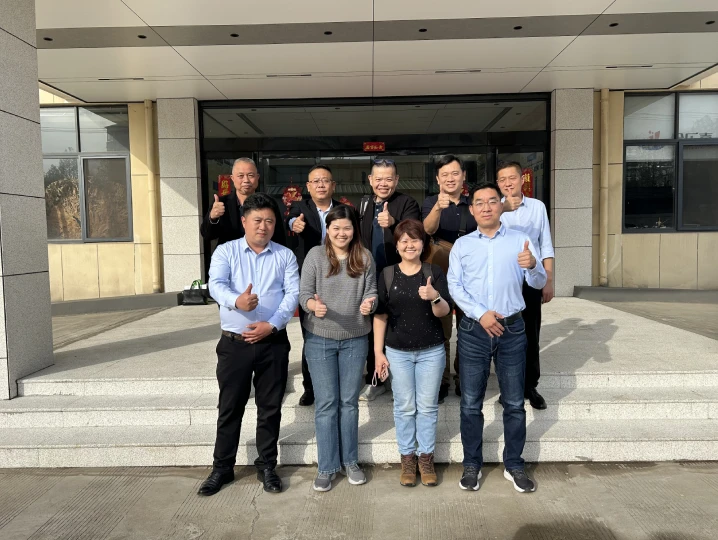
For this purpose, Ye Yingwang, Vice President of Beijing Institute of Dietary Health and Medicinal Cuisine, paid a two-day visit to Jinlejia Group in Luoyang from May 20 to 21.
During this trip, he carried out thorough research and communication. Specifically, the two sides mainly discussed innovative medicinal snack development and full industrial chain layout of edible mulberry leaves.
Meanwhile, Zhao Kaike, Chairman of Jinlejia Group, and Ba Zhijie, our Production Technology Director, accompanied the whole tour and joined all bilateral talks.
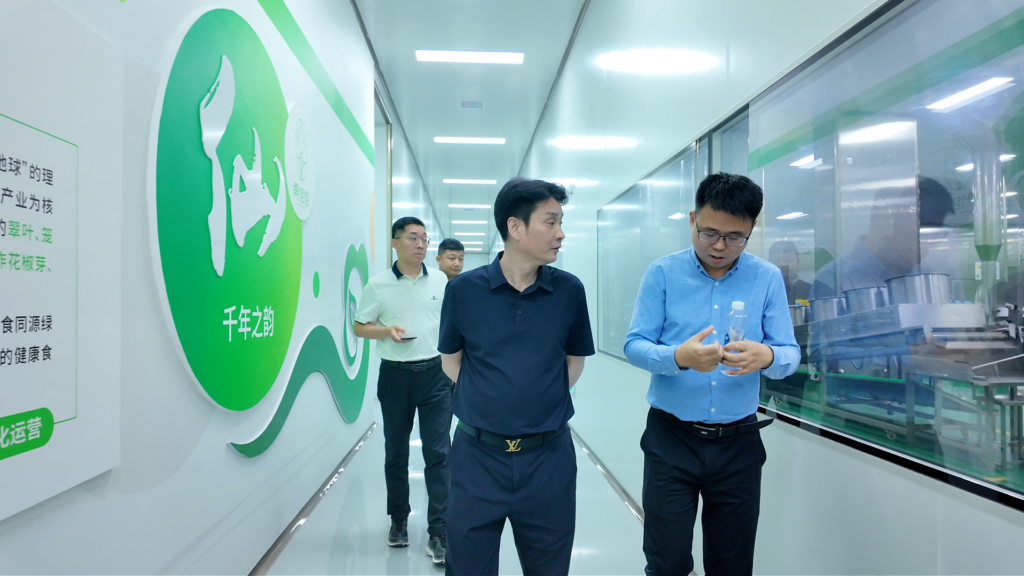
On-site Inspection of Full Industrial Chain Layout
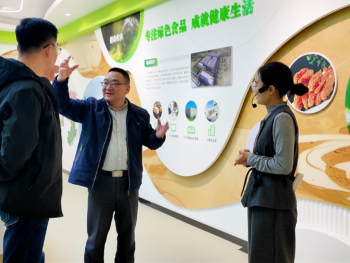
During the visit, Vice President Ye and his team toured Jinlejia’s production lines, R&D labs and raw material planting demonstration base.
First of all, they gained full insight into our complete industrial layout, covering food production workflow, strict quality control, new product R&D as well as mulberry leaf cultivation and deep processing.
Besides, Professor Ye closely checked samples of innovative snacks and mulberry leaf product series. Meanwhile, he asked detailed questions about raw material selection, formula design, production technology and market feedback.
Finally, he highly recognized Jinlejia’s persistent focus on healthy food and consistent adherence to the “food as medicine” development concept.
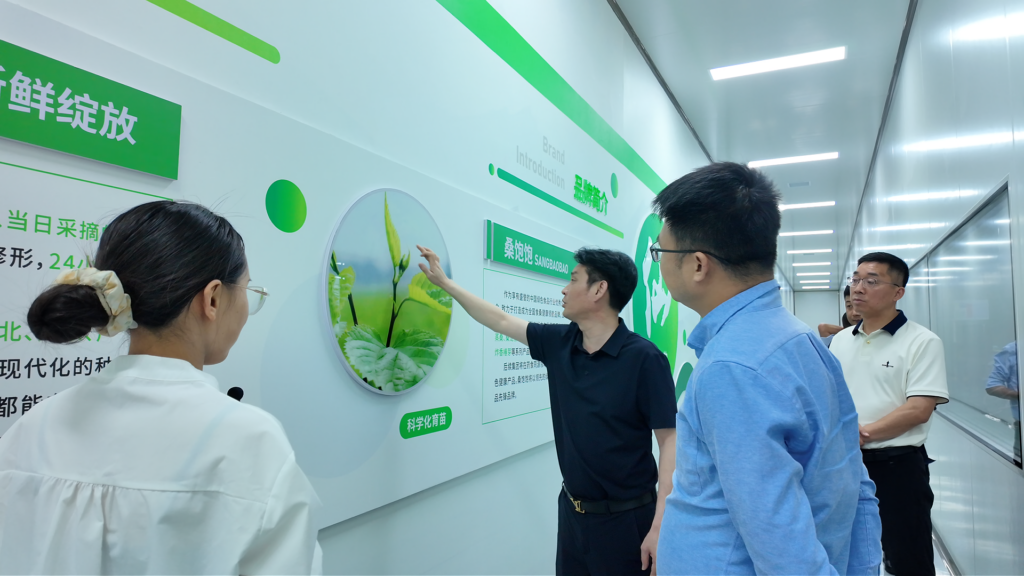
Group Chairman Introduces Full Industrial Chain Layout at Symposium
At the forum, Chairman Zhao Kaike warmly welcomed Vice President Ye Yingwang. Meanwhile, he gave a full overview covering Jinlejia’s development history, core businesses and future industrial plans.
First of all, he stated that the Group takes advantage of Luoyang’s local resources to focus on eco-friendly, healthy leisure food. Specifically, we have built a complete mulberry leaf (Luosang 933) industrial chain covering cultivation, R&D, production and sales.
In addition, we cooperate with universities to build joint research platforms. Based on the “food as medicine” concept, we keep developing innovative snacks. Our goal is to integrate traditional dietary health wisdom into daily snacks, so as to satisfy consumers’ rising demand for diversified healthy food.
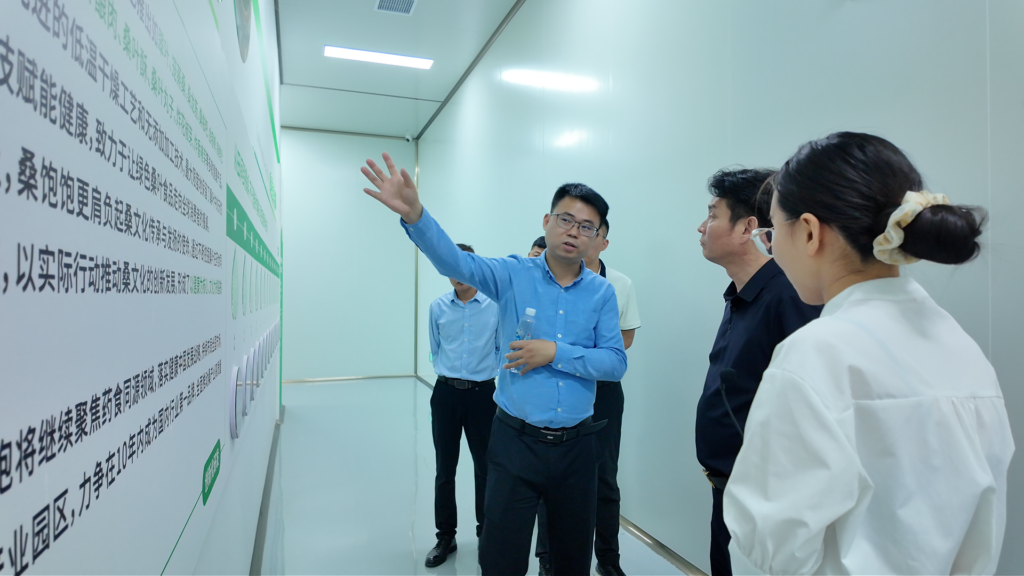
After that, Ba Zhijie, Head of Production Technology, provided additional insights into the nutritional properties of mulberry leaves, the challenges in product development, and the focus of technical research. He highlighted the Group’s technical explorations in areas such as mulberry leaf preservation, retention of active ingredients, and taste optimization, as well as the current progress in the development of innovative snacks and the status of market trials.
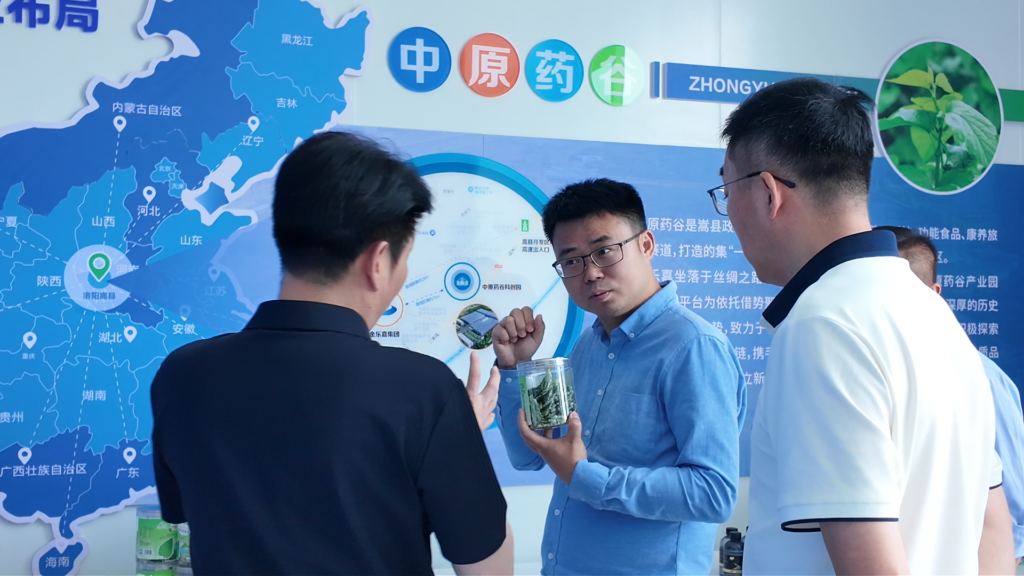
Industry Outlook & Technical Suggestions on Food-Medicine Development
During the exchange, Vice Dean Ye Yingwang shared his professional analysis.
First of all, the food-medicine sector worth 370 billion yuan now enters a prime growth stage; demand for healthy products stays strong, and traditional herbal raw materials have huge innovation potential.
Specifically, mulberry leaf is a classic food-medicine raw material. It contains abundant dietary fiber, flavonoids and DNJ (plant insulin), with health functions of clearing heat, moisturizing dryness and protecting eyesight. Besides, mulberry leaves have transformed from silkworm feed into popular healthy food, owning vast market space.
Moreover, he stressed that innovative snacks act as a key carrier to popularize food-as-medicine culture. We need to stick to the standards of mild ingredients and balanced nutrition, and strike a balance among safety, taste and practical health effects.
At the same time, enterprises must raise standard awareness, follow industrial technical norms, and drive standardized, high-quality industrial development.
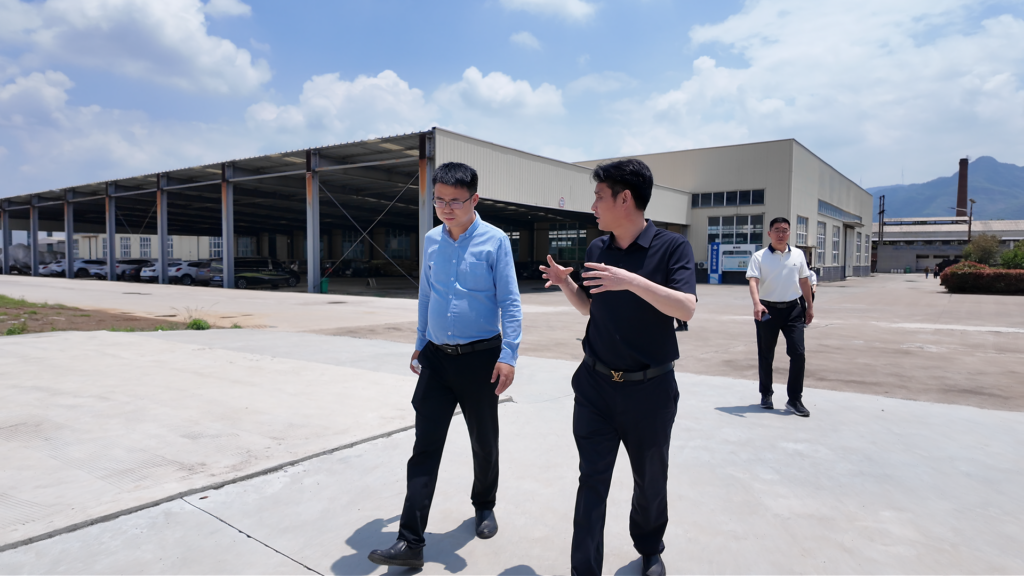
Three Suggestions for Bilateral Industry-University Cooperation
For future bilateral cooperation, Vice Dean Ye Yingwang put forward three targeted proposals:
First of all, deepen industry-university-research cooperation. We will combine the institute’s academic resources with Jinlejia’s production and market strengths. Jointly, we research mulberry leaf deep processing and new snack formulas to speed up commercialization of research achievements.
Secondly, build differentiated product lines. Centering on young consumers, we develop attractive, portable mulberry leaf health snacks to lift overall product competitiveness.
Thirdly, co-establish an industrial exchange platform. Relying on the International Food-Medicine Innovation Conference, we boost brand building and market expansion for Luoyang’s medicinal food sector, and further support rural revitalization.
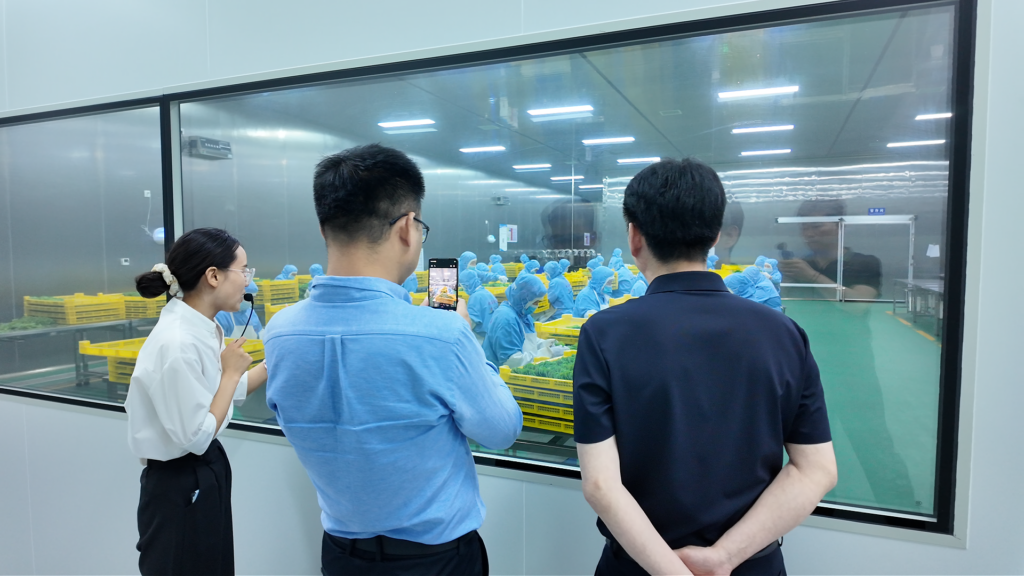
This visit and research provided professional guidance and inspiration for the development of Jinlejia Group’s food-medicine integration industry, while also building a bridge for in-depth cooperation between the research institute and the enterprise. Moving forward, both parties will use this exchange as an opportunity to build consensus and move forward together. They will engage in practical cooperation in areas such as the research and development of innovative snacks based on the “food as medicine” concept and the industrial upgrading of edible mulberry leaves. By leveraging innovation to empower the inheritance of traditional dietary health culture and using quality to drive the development of the health industry, they will jointly write a new chapter in the high-quality development of the “food as medicine” industry.