A crispy coating may look simple, but achieving the same coating performance in every production batch is not always easy.
For food manufacturers, restaurants, and food processing companies, coating consistency directly affects product appearance, texture, adhesion, frying performance, and customer experience.
You may use the same recipe and the same coating material, yet the final product can still turn out differently.
Why?
Because consistent coating performance depends on more than the coating ingredient itself.
It is the result of several factors working together — ingredients, particle size, moisture, adhesion, application process, frying conditions, and production control.
In this article, we will look at the key factors that determine whether a food coating performs consistently and how manufacturers can improve coating stability in production.
What Does “Consistent Coating Performance” Mean?
A consistent coating should deliver similar results from batch to batch.
For a breaded or battered product, this usually means:
- Even coating coverage
- Strong adhesion to the food surface
- Consistent coating thickness
- Uniform color after frying
- Stable crispiness
- Controlled oil absorption
- Similar frying time
- Consistent appearance and texture
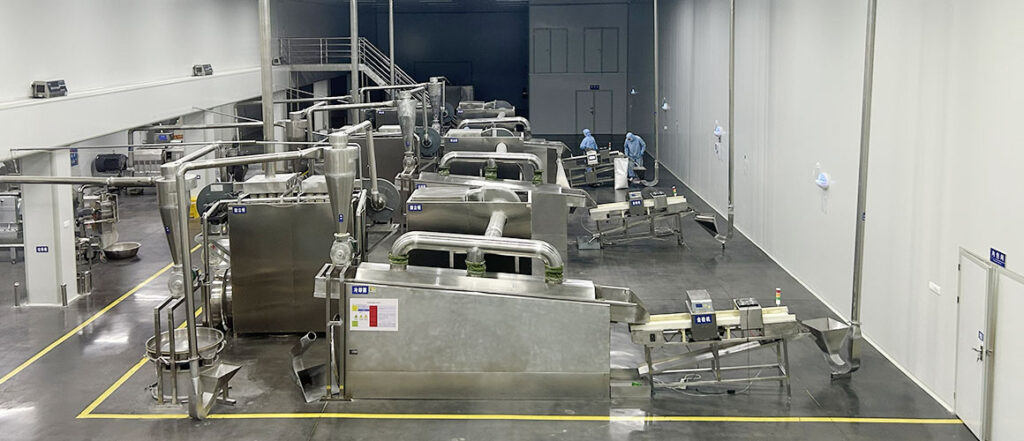
For food manufacturers, consistency is especially important when production volumes increase.
A coating that performs well in a small test batch may not automatically perform the same way on a larger production line.
That is why coating performance needs to be considered as a complete process, rather than simply a single ingredient.
1. Raw Material Consistency Comes First
One of the most important factors in coating performance is the consistency of the raw materials.
Variations in raw materials can affect:
- Moisture content
- Particle size
- Color
- Water absorption
- Oil absorption
- Adhesion
- Frying performance
For example, if the particle size of breadcrumbs changes significantly between batches, the coating coverage and final appearance may also change.
This is particularly important for products using panko breadcrumbs, where particle size and structure influence the final texture and visual appearance.
For breading premixes, the formulation and quality of individual ingredients also need to remain stable.
A reliable coating system therefore starts with controlled raw material inspection and standardized specifications.
2. Particle Size Affects Coating Coverage
Particle size is another key factor that is often overlooked.
Different food products require different coating structures.
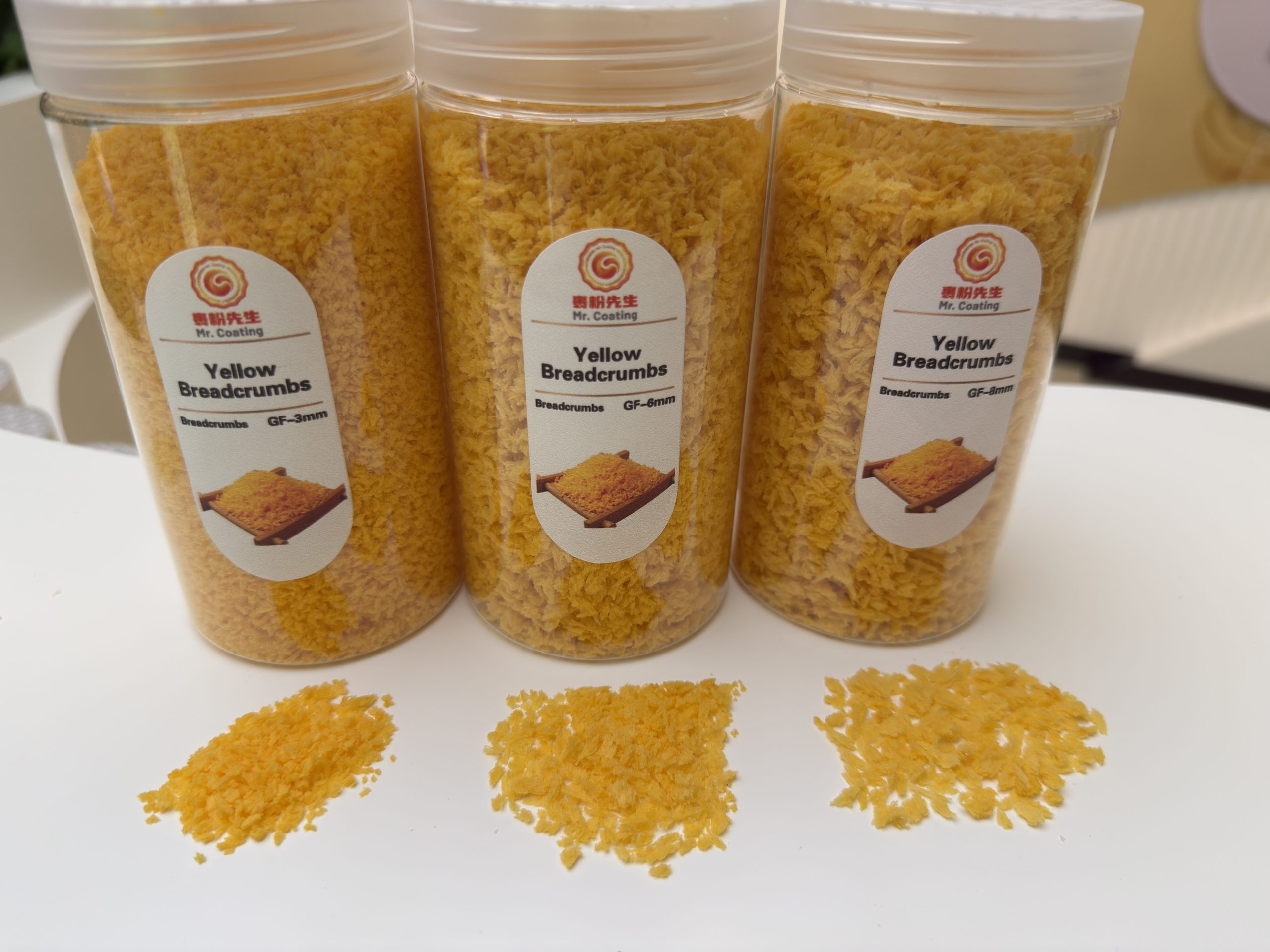
Large breadcrumb particles can create a more visible and textured crust, while smaller particles can provide more uniform coverage.
For example:
- Fine crumbs may be suitable for products requiring a smoother surface.
- Medium-sized crumbs can provide a balanced crispy texture and coverage.
- Larger panko particles can create a more open and pronounced crispy appearance.
However, particle size alone does not determine the final result.
The shape, structure, moisture, and distribution of the particles also influence how the coating behaves during application and frying.
This is why selecting the appropriate breadcrumb size for the target product is an important part of developing a coating solution.
3. Moisture Affects Adhesion and Crispiness
Moisture plays an important role throughout the coating and frying process.
If the food surface is too wet, the coating may become uneven or lose its desired texture.
If the surface is too dry, the coating may not adhere properly.
Moisture can also affect the transition from coating application to frying.
During frying, water inside the food moves toward the surface and interacts with the coating. If the coating structure does not handle this moisture effectively, the finished product may lose crispiness more quickly.
This is one reason why a product that is crispy immediately after frying may become soft after several minutes.
For manufacturers, controlling moisture at different stages can help improve coating stability and finished-product performance.
4. Adhesion Is Critical
A coating can have good flavor and texture, but if it does not adhere properly, the finished product will still have problems.
Poor adhesion can lead to:
- Coating loss during handling
- Uneven appearance
- Bare spots
- Excess coating in some areas
- Increased production waste
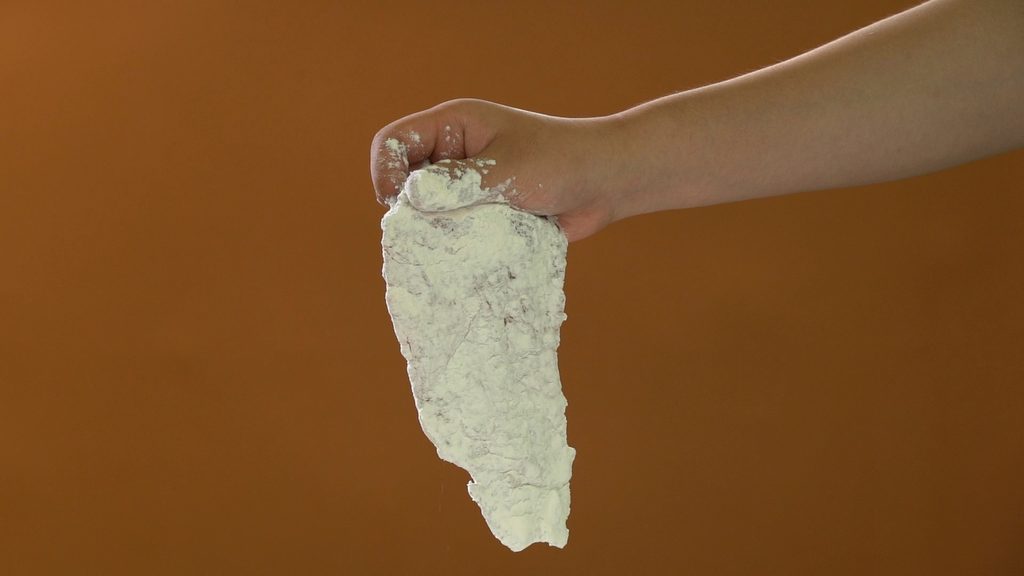
A typical breading system may involve several stages, such as:
Food Preparation → Pre-dusting → Batter → Breading → Frying
Each stage affects the next one.
The surface condition of the food, the viscosity of the batter, the coating particle size, and the application method all influence adhesion.
Therefore, improving adhesion is not always a matter of simply changing the breading material.
Sometimes the entire coating system needs to be evaluated.
5. The Breading or Batter Formula Matters
For many processed foods, a consistent coating requires more than breadcrumbs.
A complete coating system may include:
- Pre-dust
- Batter or breading mix
- Breadcrumbs or panko
- Seasoning
- Marinade
- Processing conditions
A properly formulated breading premix can help standardize the coating process and reduce variation between operators or production batches.
The goal is not simply to create a thick coating.
The goal is to achieve the right balance between:
Adhesion + Coverage + Texture + Color + Frying Performance
Different products may require different coating systems.
Chicken nuggets, chicken tenders, fish fillets, shrimp, onion rings, and fried vegetables do not necessarily need the same coating formulation.
6. Frying Conditions Can Change the Final Result
Even when the coating itself remains unchanged, frying conditions can significantly affect the finished product.
Important frying variables include:
- Oil temperature
- Frying time
- Product size
- Product-to-oil ratio
- Oil condition
- Fryer type
- Production speed
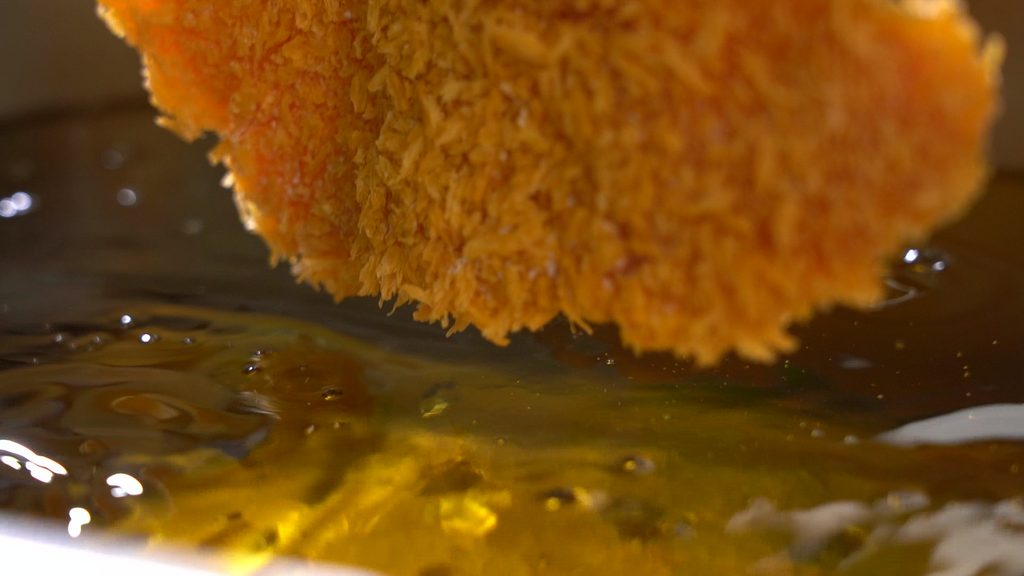
For example, if the oil temperature drops significantly when too much product enters the fryer at once, the coating may absorb more oil and develop a different texture.
Similarly, excessive frying time can affect color, moisture, and texture.
This means that coating performance cannot be separated completely from the frying process.
A coating should be evaluated under the actual or intended processing conditions.
7. Oil Condition Also Matters
The condition of frying oil can change the appearance and texture of coated foods.
As frying oil is repeatedly used, its condition changes.
This may affect:
- Product color
- Flavor
- Coating appearance
- Oil absorption
- Frying performance
Therefore, when testing a new coating, it is important to consider not only the coating material but also the frying oil and production environment.
A coating that performs consistently in controlled laboratory conditions should still be validated under real production conditions.
8. Production Control Creates Consistency
Consistent coating performance ultimately depends on production control.
A professional coating manufacturer should have standardized procedures covering the entire process, from raw material inspection to finished product storage.
For example:
Raw Material Inspection → Screening → Batching → Mixing → Production → Quality Control → Packaging → Finished Product Storage
Depending on the product category, additional processing steps may be included.
The purpose of process control is simple:
Reduce unnecessary variation.
When raw materials, formulations, mixing procedures, production parameters, and quality standards are controlled, manufacturers can achieve more predictable coating performance.
9. Laboratory Testing Helps Identify Coating Problems
When a coating does not perform as expected, changing the ingredient immediately may not always be the best solution.
A better approach is to identify where the variation comes from.
Testing may include:
- Appearance
- Particle size
- Moisture
- Adhesion
- Frying color
- Crispiness
- Coating coverage
- Oil absorption
- Finished-product texture
For customized coating solutions, testing can also compare different formulas, particle sizes, or application methods.
This approach helps manufacturers move from “the coating doesn’t work” to a more specific question:
Which part of the coating system needs to be adjusted?
That distinction can save both development time and production costs.
10. Consistency Starts With the Right Coating Solution
There is no single coating that works perfectly for every fried food product.
The ideal coating depends on the food itself, processing method, desired appearance, target texture, and production conditions.
For example, a manufacturer producing crispy chicken may focus on:
- Strong adhesion
- Rough and crispy surface
- Stable color
- Long-lasting crispiness
A fish processor may have different requirements, such as:
- Gentle coating adhesion
- Uniform coverage
- Controlled coating thickness
- Clean appearance
A shrimp product may require another coating structure altogether.
This is why choosing a coating should start with the finished product requirement, rather than simply choosing an ingredient.
A Simple Way to Think About Coating Consistency
You can think of coating performance as the result of four connected elements:
Ingredients
Are the raw materials and coating components consistent?
Coating System
Are the particle size, formula, adhesion, and coverage suitable for the product?
Processing
Are battering, breading, frying, and other processing conditions controlled?
Quality Control
Are key parameters monitored and standardized from batch to batch?
In simple terms:
Ingredients + Coating + Processing + Quality Control = Consistent Results
If one part changes significantly, the final product may change as well.
What Should Buyers Look for in a Coating Supplier?
For food manufacturers and international buyers, purchasing a coating is not simply about comparing prices per kilogram.
A more complete evaluation should include:
1. Product consistency
Can the supplier maintain stable quality between batches?
2. Particle size control
Can the supplier provide the required breadcrumb or coating size?
3. Production capability
Does the manufacturer have standardized production processes?
4. Quality control
Are raw materials and finished products properly inspected?
5. Application support
Can the supplier help match the coating to a specific food product?
6. Customization capability
Can the formula, particle size, color, texture, or seasoning be adjusted according to the application?
7. Sample testing
Can the supplier provide samples for testing before a larger order?
These factors can be more meaningful than looking at the product price alone.
From Ingredients to Solutions
At Guofen Mr., we believe that a coating supplier should do more than simply provide an ingredient.
Different products have different requirements.
That is why our approach focuses on food coating and seasoning solutions, including panko breadcrumbs, crispy flakes, breading and batter premixes, and marinade seasoning products.
By considering the product, coating system, application process, and desired finished result together, manufacturers can develop a more suitable coating solution for their production needs.
Because in food processing, consistency is not just about making one good batch.
It is about making the next batch perform the same way.